
WHCM Spring 2018 Networking Event
Join colleagues, friends and members for an informal night of conversation and networking. Connect with other women in the healthcare industry. Appetizers and a cash bar included. Hope to see you there!
Join colleagues, friends and members for an informal night of conversation and networking. Connect with other women in the healthcare industry. Appetizers and a cash bar included. Hope to see you there!
Companies today face pressures from both external and internal sources to find ways to cut down costs and raise revenues. This ultimately raises the question, how can leaders remain a valuable asset to an organization and provide leadership guidance without getting phased out from technology solutions in an increasingly complex digital age? We have compiled a helpful set of guidelines to provide leadership guidance in today’s digital age.
How Leadership Is Changing In A Digital Age
Leadership used to be categorized as providing command and control in various situations. Whether it was a command on when or how to do something, or control in monitoring those actions and gauging across several metrics – it’s no longer that simple. Increasingly, leadership is changing in a digital age by how well leaders can identify new solutions and monitor the addition of those new solutions.
Previously, leaders were expected to maintain a close relationship with their peers and subordinates, but now they must learn to provide leadership from a distance – which can be difficult for some.
The days of continually checking in with employees or peers to monitor their progress are long over, it’s all digital now. Few industries notice the effects of leadership from a distance greater than the healthcare industry. As an example, when a nurse goes into a patient’s room, they scan the barcode on the wristband of the patient. From there, they then scan any IV drips or medication provided to the patient. All this, while using a mobile unit that has the employee’s ID and employee number in the system and provides real-time updates to a system that is easily monitored.
This allows nurse leaders and healthcare executives to monitor patient treatment frequencies, medication delivered, and employee rotation. It wasn’t too long ago when healthcare leaders had to walk around each floor and monitor the progress of their subordinates and peers.
How Leaders Can Provide Guidance In The Changing Environment
Even though companies look to cut down on expenses and switch to these real-time digital solutions that are less expensive and increase productivity overall, leaders are still needed – their role just changes slightly.
Moving forward, leaders can provide guidance in how they seek out new solutions and then monitor the implementation of those new solutions. In addition, leaders can provide guidance by assisting employees and peers with learning those new solutions and monitoring room for improvement in existing technologies.
Some of the biggest trends in today’s digital age are automation, cloud computing, and big data. Individuals can provide leadership guidance by understanding how these trends are being used and can potentially be implemented to improve daily methods and procedures.
Leaders must become more accustomed to making decisions through the use of these modern digital technologies. In the event these new digital solutions don’t provide the answers one is looking for, leaders must find new ways to manipulate the technologies for answers to their questions. Increasingly, leaders can no longer only be accustomed to using one program or digital solution. Instead, leaders must learn how to manipulate and become proficient in a host of different technology solutions.
Summary
In conclusion, previous leadership guidance and styles many are accustomed to no longer work in today’s digital age. With new technological solutions that eliminate the need for peer-to-peer or employer-to-employee interaction, leaders should find ways to become accustomed to balancing the changing environment of the modern digital age. Leaders can provide guidance in learning new digital solutions, implementation, and improvement of those solutions.
More so than ever, leaders are needed to help push every industry forward by being the driving force to create and implement digital solutions that will help cut cost, improve customer service, and raise revenues.
Thank you to our guest post contributor, Ryan Bucci, a Content Strategist with HospitalCareers.com. HospitalCareers is the leading healthcare and hospital recruitment platform with over 25,000+ hospital jobs, career advice, and insights for qualified healthcare professionals.
I was working recently with a new student, who I am mentoring, and we discussed (what I find to be) the most important topic when building a relationship like this, how do you like to receive feedback and constructive criticism?
Primarily, this is the most important lesson for me, as the mentor. It is inevitable that there will be feedback, which is why we ask for mentoring, right? So how do you like it served?
I, for one, prefer direct and transparent communication. Don’t open with “here is what you are doing very well”, and shove the opportunities for improvement in the middle. That seems to beg the analogy of a “crap filled Oreo”. Give examples, bring me back to the instance when I performed the task, and what I could have done better. Bring me back to the conversation that took place, and show me where I could have guided it more efficiently, or changed course if appropriate?
What environment do you like to receive this in? I appreciate the one on one atmosphere with my mentor or next level. I want it to be the purpose of our time together. Feedback is not about just giving and receiving, it often requires a further discussion. It is of the utmost importance as a mentor, that feedback time is blocked for only that.
When would you like it? Personally, I prefer getting the feedback in the moment. Handling the situation at hand, and then having a time out to “debrief” about what could have gone better.
Feedback and criticism play a vital role in the development of leaders. It is so important that we are coordinating the way in which it is given to be the most beneficial to our student and as a set up for success in the overall experience.
Blog post by WHCM Steering Committee Member Jennifer Pendleton
This past Tuesday’s networking event in the Longwood Medical Area of Boston was a fun, energetic start to the New Year. We had more than 30 ladies attend, and I am always interested to meet new women and see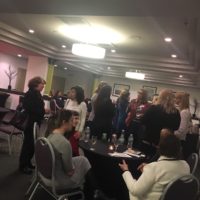 the mix of professions and organizations – influenced in part by where we hold the networking event. I met women from all different healthcare industries and professions – quality, marketing and digital branding, law, assisted living, and a physician with her doctorate from another country who is seeking a job now that her daughter is a bit older and in school. We discuss so many great things, from healthcare industry changes, potential solutions to job hurdles, or sometimes just a tip about parking or an event.
The kaleidoscope of paths and range of professions that fall under the “healthcare” label is fascinating, and one I look forward to learning about at each networking event.
Blog post by WHCM Steering Committee Member Rachel Labas
 Join us for the first of our two annual yearly forums – this spring, our forum will feature dinner, networking, and an informative, interactive panel discussion.
Moderator: Claudine Swartz, Strategic Policy Solutions
Panelists:
Sonia Millsom – Senior Vice President, Iora Health
Ms. Millsom leads Business Development for Iora Health with a mission to restore humanity to healthcare. Her passion for healthcare delivery reform started 25 years ago as a Peace Corps Volunteer in Morocco. She is a mentor through Menttium & Council for Women at Boston College and is a Board Member at HealthSourceRI, Social Enterprise Greenhouse and the Amy Gallagher Foundation. Following a BA from Boston College, she graduated from Columbia University with her MPH and has led growth at a national health plan, population health management organization and second opinion company. She is an avid runner, yogi, traveler & non-fiction geek and has been married 18 years with the text handle “Tiger Mom” to two daughters 15 & 12.
Lauren Peters – Undersecretary for Health Policy at the Executive Office of Health and Human Services (EOHHS)
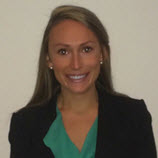 THe EOHHS is the largest secretariat in the Commonwealth. Peters’ responsibilities include working closely on health-related operations and policy for the MassHealth (Medicaid) program that provides health coverage to 1.9 million low income or disabled residents; the Department of Mental Health; and the Department of Public Health. Peters also works closely with EOHHS boards and commissions such as the Massachusetts Health Connector and the Center for Health Information and Analysis Oversight Council. Prior to joining EOHHS, Peters served as Associate General Counsel, Health Care Policy Director, and Legislative Director at the Executive Office for Administration and Finance (A&F) where she served as an advisor on healthcare finance and policy matters. In that role, Peters also served as the A&F Secretary’s designees on several boards and commissions including the Health Policy Commission, Group Insurance Commission and the Health Information Technology Council. She has a law degree from Suffolk University Law School and a bachelor’s degree from Hobart and William Smith Colleges.
Christina Severin – President and CEO, Community Care Cooperative
Christina Severin is an accomplished health care executive with more than 20 years of experience in managed care, delivery systems, health insurance, Accountable Care 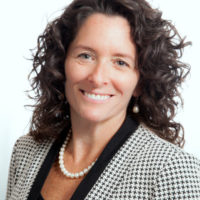 Organizations, quality, public policy, and public health. Christina is the President and CEO of Community Care Cooperative (C3), a newly formed Accountable Care Organization comprised of 15 community health centers.
Christina’s prior leadership experience includes having served as President and Chief Executive Officer of Beth Israel Deaconess Care Organization and as President of Network Health, a nonprofit Massachusetts health plan.
She is widely recognized, including by the Boston Globe as a Top 100 Women-Led Business, October, 2015. The Boston Business Journal has recognized Christina as a “40 Under 40” honoree, profiled her in its “Women Up” feature, and named her to its list of top health care executives to change roles in 2013.
Christina has taught classes in health care administration and management at Boston University, Harvard University, and Northeastern University. Christina earned a Master of Public Health with a concentration in Health Services from Boston University School of Public Health, and a Bachelor of Arts in Political Economy from the University of Massachusetts at Amherst.
Beth-Ann Roberts – Senior Vice President, Commercial Business, Harvard Pilgrim Health Care
Beth-Ann Roberts takes a vision and makes it a reality through sound market-based strategy, with a focus on profitable growth. Respected as a passionate, no-nonsense leader with a credible voice in decision making, she sees opportunities and works cross-functionally within the organization to develop and implement strategies that drive business advantage. She has a reputation for building a teamwork approach, breaking down barriers and eliminating silos.
As Senior Vice President of Commercial Business at Harvard Pilgrim Health Care — a $3.0 billion, non-profit health insurance company serving over a million members — Ms. Roberts oversees the four commercial markets where Harvard Pilgrim offers insurance. With more than 30 years’ experience in the health care market, she specializes in identifying synergies, establishing internal partnerships, leveraging talent and leading a team of over 200 staff to identify the most promising opportunities within Massachusetts, New Hampshire, Connecticut and Maine. The careful balance of understanding the external market—including the products and services that drive successful business growth—and, optimizing Harvard Pilgrim’s strengths delivers winning solutions to the market.
Previously, as Senior Vice President for Regional Markets, Ms. Roberts led market-based strategy for New England, with direct responsibility for growing New Hampshire. Under her leadership, Harvard Pilgrim became the second-largest health plan in that state by entering new lines of business, forming unique partnerships and implementing a strategic approach to business development.
Ms. Roberts serves as Chair of the Board of Trustees for the RiverWoods Group and is a Board member of Benevera. In addition, the New Hampshire Business Review recognized her as an Outstanding Woman in Business in 2008, and in 2015 Business New Hampshire named her one of the top intriguing women of NH.
Ms. Roberts holds a Masters of Business Administration from Boston University.
Ms. Roberts and her husband Michael have two children, Branden and Bryanna. She raised her family in Londonderry, New Hampshire, and now resides in Waltham, Massachusetts, where she enjoys spending time outdoors with her family, and an active lifestyle that includes cycling, running, hiking and boating.
Having worked in government affairs the majority of my professional life, and currently working as Director of Government Relations for Atrius Health, my job absolutely depends on the relationships I develop and maintain. Probably the most important thing I’ve perfected is the art of networking and how important it is for the success in your career, no matter whether you are just entering into the marketplace or if you’re more seasoned.
Below are just a few of my tips for successful networking I try to use in my everyday life – like at meetings of Women in Healthcare Management -particularly if you’re attending an event for the very first time, don’t know any of the attendees or if there’s a large gathering.
Blog post by WHCM Steering Committee Member Kathy Keough
When entering a leadership role, the one thing that we can all agree on is that we think of ourselves last, everything comes before our needs! Our staff, our strategic plan, team development and the everyday “fires” we are trying to contain, ALWAYS come first! Lately, with roll out of a new EMR, regional expansion and practice development, I have found myself overwhelmed and often wondering, is this what it will always be? Is this it? I reflected back to a project I did in November of 2016, and realized that by doing something for myself, I was able to benefit my staff, my institution and my commitment to being a great leader. In corporate worlds, we are always striving for the mission, vision and philosophy of the institution. We use these pillars to build our next steps, goals and projects. Have you thought about your own philosophy as a leader? Have you thought of the way that you see yourself as a leader? Creating this forces us to look at our personal values, our assumptions and our beliefs about leadership.
Start by identifying your leadership values, define them and describe how you see these playing out in your leadership style. Then uncover your assumptions, reflect on a positive and a negative experience, what do you define as leadership? Then, understand your beliefs of leadership. What do you believe? What is the purpose of leadership?
Once you have identified values, unearthed those assumptions and understand your beliefs, you are ready to write your personal statement! Understand that this philosophy will change as you grow, as you develop and as you maneuver through changes in your personal values, beliefs and assumptions.
Do this exercise, not just for your own foundation to build on, but to use in your leadership of others, your coaching and mentoring. Do this exercise for your professional development and your career.
Blog post by WHCM Steering Committee Member Jennifer Pendleton
Our 2017 Fall Forum was a success! More than 70 women enjoyed a buffet dinner and networking for the first half of the night, and then, as is typical for our Fall Forums, we had two breakout sessions based on what our members expressed an interest in learning more about.
 In the first, Career Strategist, Sarah Cardozo Duncan, led a lively group exercise on how to quickly make a lasting impression with new contacts. Some points we learned: Establish your personal brand through story telling. A name, a business card, a dress-for-success outfit are often forgotten. Most people remember a story, however. Weave together highlights of your career beginnings, professional achievements, and current aspirations. Be prepared to tell your story to new acquaintances with enthusiasm and good eye contact. These introductions are more likely to leave a lasting impression of you (your brand) and turn into your next job or customer lead. Some key questions to address as you develop your story are: How did you get into what you do? What kind of clients do you have? What do you bring to the table? Tell me a personal success story?
In our second breakout session, Healthcare Recruiters Emmy and Phoenix and Business Development Manager Kaylee from the Addison Group presented on the modern job search. Addison Group specializes in placing candidates in long 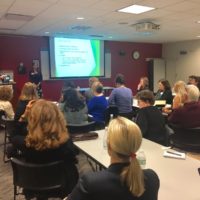 term opportunities within the business side of healthcare in staff level roles from billing to medical records. Many attendees asked questions on LinkedIn profiles and utilizing LinkedIn to its full potential, so the majority of the presentation was spent discussing this very useful job searching and networking tool. The women graciously offered their insights to attendees after the session for one-on-one reviews of their LinkedIn profiles.
Blog post by WHCM Steering Committee Members MaryGaye Grizwin and Rachel Labas
Join colleagues, friends and members for an informal night of conversation and networking. Get out of the house during the winter season and be warmed through connections with other women in the healthcare industry. Appetizers and a cash bar included. Hope to see you there!
The concept of hand-offs became popular in nursing literature and practice in the past decade. The success of hand-offs rests solely in communication. As teams operate in a lean staffing model, projects are inevitably going to be subjected to hand-offs. Passing work off is not a reflection on anyone’s work, it’s simply a necessity of conducting good business. During summer months when folks are taking time off to celebrate birthdays, children leaving the nest, and summer sun and fun, organization departments can see a peak in handing off projects. No-one should sacrifice their time off by thinking that their project cannot be successfully handed off and tackled by one of their equally qualified peers. A person’s ability to recharge and unplug is critical. If teams want to be successful they have to trust that they contribute to the department’s success. Three key phases of hand-offs are: 1) information exchange 2) transferring responsibility and demonstrating accountability 3) continuity of business. Below are some suggestions to a successful hand-off.
For the person covering the project:
In the end, communication is key to hand-offs and sharing pertinent information is essential. Regardless of who is in the office or out, part of a successful team and organization, depends on the continuity of business processes and work flow. Hand-offs prepare all persons involved in the project with a sense of ease that tasks will not fall through the cracks.
Blog post by WHCM Steering Committee Member Gail Winslow